


Eleven decorating ideas, a beginner's color guide,and six ways to get the look without the kitsch.
There's a reason coastal décor never really goes out of style. It's light. It's calming. And it brings a little of that beach-vacation feeling into everyday life — no ocean view required.
Done well, coastal spaces feel elevated, airy, textured, and effortlessly pulled together. Not kitschy. Not themed. Just like the room took a deep breath of salt air.
If you're ready to bring that relaxed, breezy vibe into your own home, start here. These are the moves that make a room feel coastal without turning it into a souvenir shop.
1. Bring Out the Blues (and Greens)
If there's one color most associated with coastal décor, it's blue — from the palest powder blue to a deep, dramatic navy. Green is a natural partner (think sea glass, seafoam, or soft sage). Small pops of coral, orange, or yellow add warmth without pulling the look away from its beachy roots.
The easiest way to work blue into a space is through accessories: patterned pillows, a blue-and-white area rug, ginger jars, wallpaper on the back of a bookcase, or a duvet in a soft coastal print. Keep larger furniture pieces neutral and let color come through in smaller, swappable details.

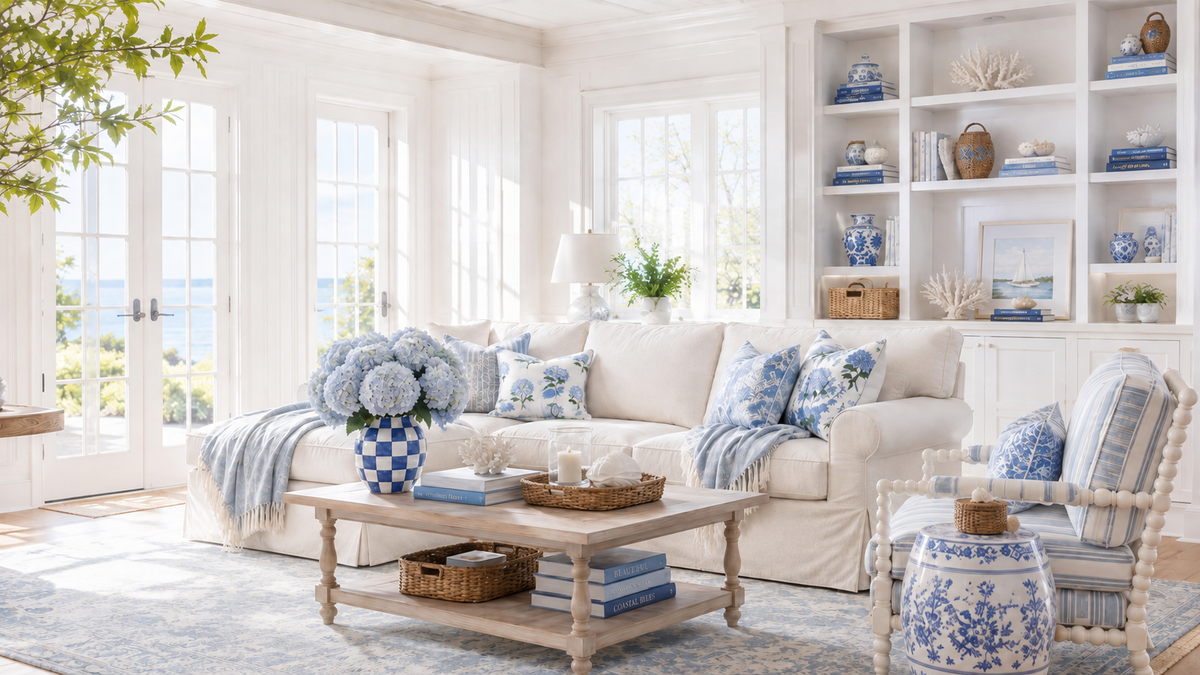
Coastal living room: white slipcovered sofas, tonal blue pillows, a weathered wood table, and hydrangeas doing the work of a whole color story.
2. Keep Your Walls Soft and Bright
You don't need to paint every wall white, but soft, light colors are key. Creamy whites, pale blues, soft greens, and warm greiges echo sand, sky, and sea glass.
Popular starting points include Benjamin Moore Chantilly Lace, Simple White, Palladian Blue, Beach Glass, and Pale Oak. On the Sherwin-Williams side, Sea Salt, Snowbound, and Krypton are reliable go-tos. A light backdrop lets furniture, textures, and accessories really shine.
3. Showcase Shells and Coral Thoughtfully
Shells and coral are classic coastal motifs, but they tip into kitschy territory fast. The key is restraint.
Instead of scattering shells everywhere, create one or two curated vignettes: a large clamshell filled with sea-glass beads on an entryway console, or a piece of faux coral used as a coffee-table book topper. Coral-inspired mirrors, sculptural coral pieces, and shell-filled bowls are elegant nods. A little goes a long way.
4. Layer In Natural, Woven Textures
Nothing says coastal quite like natural materials. Seagrass, jute, rattan, bamboo, and cane bring warmth and texture that keep an all-white or all-blue room from feeling flat.
Go big with a jute rug or rattan dining chair, or start small with a woven basket, a scalloped jute doormat, or a rattan pendant. Even a simple wicker tray on the coffee table can instantly nod to the coast. The mix of textures is what gives the look its collected-over-time feel.
5. Add a Classic Stripe
A crisp stripe is one of the most recognizable signatures of coastal design — a blue-and-white rug, striped pillows, or striped wallpaper instantly reads “beach house.”
Stripes work as a bold, room-defining choice (wallpapering a powder room) or as a smaller accent (peel-and-stick paper on the back of a linen closet). They also pair beautifully with florals, geometrics, and batik for a more layered coastal-chic look.

A coastal great room built on stripes: the rug, the lamp bases, the pillows. One pattern, several scales.
6. Let In as Much Natural Light as Possible
Coastal style starts with light. Before you buy a single accessory, think about how to maximize it.
Hang curtain rods wider and higher than the window frame. If a window sits close to a corner, choose a slimmer pleated style that stacks tightly. Pair either approach with sheer or lightweight linen curtains and the room will instantly feel brighter and airier.

Coastal architecture doing the lighting for you: coffered ceilings, French doors, and walls kept pale so the sun can bounce.
7. Bring In Driftwood and Other Natural Curiosities
Beyond shells and coral, driftwood, agate slices, sea sponges, and coral fossils add an easy, collected feel. They work especially well on open bookshelves alongside books, ceramics, and woven boxes — or grouped in small multiples on a console or mantel.
8. Choose Furniture With Clean, Simple Lines
Ornate, heavily carved furniture doesn't typically fit. Look instead for clean lines and simple silhouettes: a round pedestal table, an unfussy console with woven cane doors, a streamlined bench at the end of a bed. Simple shapes let the eye move easily through a room, which is a big part of why coastal spaces feel so open.
9. Warm It Up With Light Wood Tones
Wood adds instant warmth, and for coastal style, lighter finishes are the way to go. White oak dining tables, natural wood bookshelves, and light wood picture frames all work beautifully against soft walls. If existing furniture leans darker, a few smaller light-wood accessories — a bowl, a set of frames, a driftwood-style lamp base — can rebalance the palette.
10. Add Fresh (or Faux) Flowers and Greenery
A vase of hydrangeas, a palm frond in a simple ceramic vessel, or a bundle of eucalyptus can instantly bring life and a beach-vacation feeling into a room. Fresh flowers are lovely when you can keep them up; high-quality faux stems are a low-maintenance alternative, especially on mantels or shelves. White vases or blue-and-white ginger jars make the most coastal-appropriate vessels.
11. Incorporate Blue-and-White Porcelain and Chinoiserie
For a more polished “coastal grandmother” take, layer in blue-and-white porcelain, ginger jars, or chinoiserie-inspired accents. These pieces add a refined, collected-over-time quality that pairs beautifully with rattan, stripes, and soft blue walls. Use a ginger jar to hold a few shells, group a couple of different sizes on a shelf, or let a single striking piece anchor a console vignette.

A Coastal table: hydrangeas, cobalt glass, and white eyelet — the porcelain-and-blue story taken all the way to dinner.
You don't need to overhaul your whole home. Start small — a few blue-and-white accessories, a woven basket or two, curtains hung a little wider — and layer in more over time.
Which of these ideas will you try first?


