


Not a shopping list. Six habits the houses in the Hamptons and on Nantucket quietly repeat.
The coastal look people want is not themed. It is a way of editing a house so light, texture, and a little blue can do the talking. These six tips are the difference between a beach gift shop and a house that feels like August.
1. Edit the room before you decorate it
Take out three things. Then take out one more. Coastal rooms look expensive because they are under-furnished relative to their square footage — a table that can hold a vase and two books, a sofa that is not wearing eight pillows, a mantel with air on both sides of the object.
If a piece does not earn its keep as furniture or as one beautiful thing, it is clutter with a seashell on it. Start there. Paint and pillows cannot rescue a crowded room.

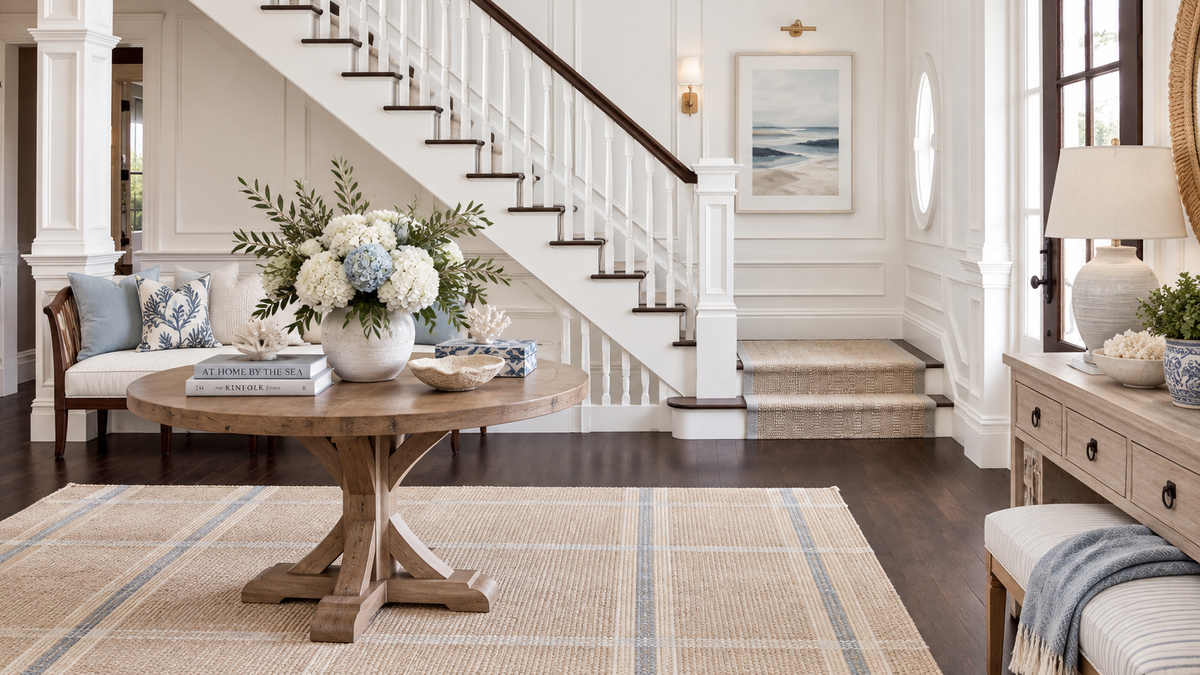
A Hamptons entry that knows when to stop: one lantern, one console, one rug, a door that lets the lawn in.
2. Treat light as a material
Hang curtains so they stack off the glass. Keep window sills clear. Use a lamp that throws a warm pool at night instead of a ceiling can that flattens everything. The houses that photograph as “coastal” are often just houses that refused to block the window.
If you have a view — water, marsh, a hedge — give it the wall. If you do not, hang a simple seascape or leave the wall pale and let the daylight be the art.
3. Pair one fine thing with one rough thing
Mahogany next to sisal. A marble sink next to a rush basket. A slipcover next to a beat-up pine table. Coastal taste is this contrast, not a matching suite. When everything is the same polish, the room looks like a showroom. When everything is distressed, it looks like a rental.
Pick the fine thing first (the table, the sconce, the door lantern). Then give it a rough neighbor so it does not float.

Marble and a farm sink, open oak shelves, terracotta pots in the window. Fine and rough in the same three feet.
4. Choose furniture that can be washed or weathered
Slipcovers, performance linen, rush seats, painted wood, indoor-outdoor rugs. The aesthetic only works if the house can take sand, wet towels, and a dog. A velvet sofa in navy can be coastal. A velvet sofa you are afraid to sit on cannot.
The test: if a guest in a damp swimsuit would ruin the piece, it is the wrong piece for this look — even if the color is perfect.

Cane, washed linen, a window that is doing most of the decorating. The bed looks like it has been slept in. That is the point.
5. Put the outside on a schedule
Hydrangeas in July. Branches in October. A citrus bowl in winter. One living thing on the table is more coastal than a year-round arrangement of coral. The porch gets real furniture, not leftovers — a rug, a table that holds a drink, chairs that face each other.
If you only do one outdoor habit, do this: sit on the porch at the same hour you would sit in the living room. Furnish it until that feels normal.

An East Hampton sunroom used as a room: wicker, a dining corner, the garden as wallpaper.
6. Do not shop the nautical aisle
Anchors, rope mirrors, oars, a flock of starfish — they announce the theme and then they cheapen it. The better version is architectural: shiplap or paneling, a lantern, a ginger jar, a stripe, brass that has been allowed to dull.
If you can buy it in a gift shop on the harbor, live without it for a month. Most of those objects are solving a problem the room does not have.

White vanity, marble, a tub, shutters. No rope. Still unmistakably a house by the water.
The coastal aesthetic is what is left after you remove the souvenirs and keep the light, the washable sofa, and one good jar of flowers.
This week: clear one surface, move a curtain rod, and put something living on the table. That is three of the six tips. The house will already look different.
Six habits. Repeat them until the room goes quiet.


